



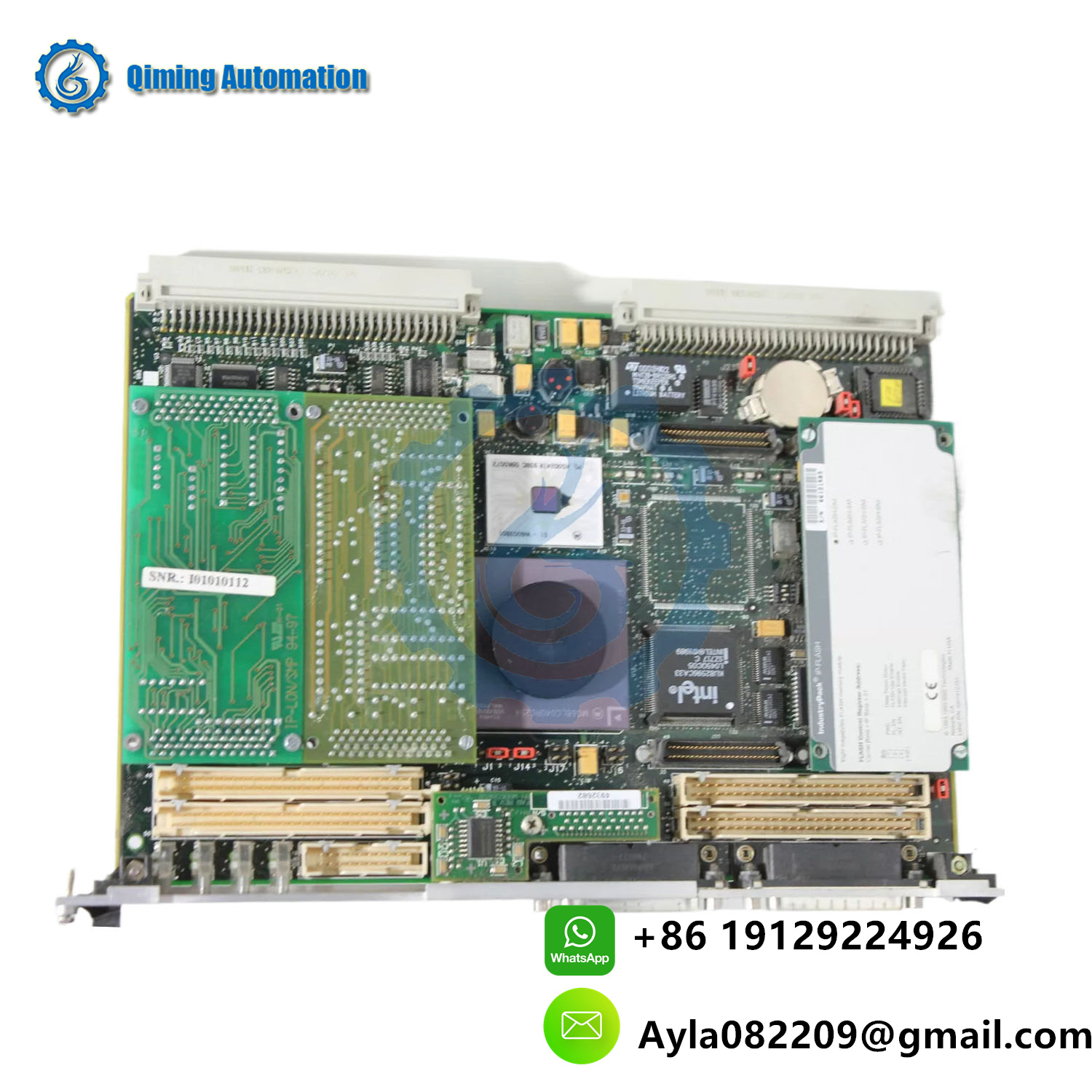

Here’s a detailed technical and functional overview of the Motorola MVME162-010A, a VMEbus-based single-board computer (SBC) designed for embedded systems and industrial automation applications. This ruggedized module is part of Motorola’s MVME1600 series, widely used in defense, telecommunications, and process control systems.
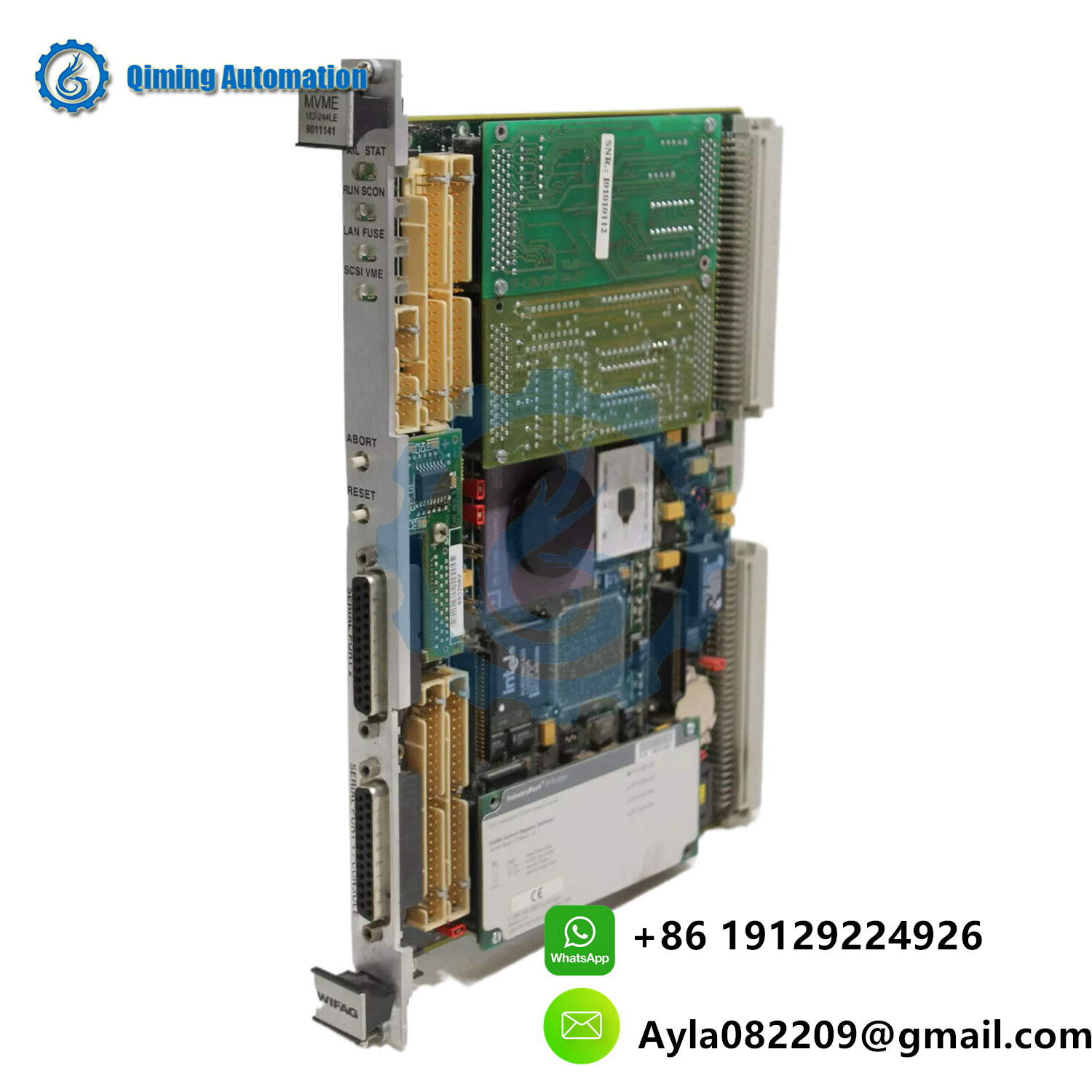
Technical Specifications of Motorola MVME162-010A
1. Processor & Architecture
- CPU: Motorola MC68040 or MC68LC040 32-bit microprocessor (compatible with 68k family).
- Clock Speed: 25 MHz or 33 MHz (depending on variant).
- Floating-Point Unit (FPU): Integrated FPU in MC68040 (optional in MC68LC040).
- Cache: 8 KB instruction/data cache (MC68040).
2. Memory
- RAM: Up to 16 MB DRAM (expandable via onboard SIMM slots).
- ROM: 512 KB Flash/EPROM for firmware and boot code.
- SRAM: 128 KB battery-backed SRAM for critical data retention.
3. VMEbus Interface
- Bus Standard: VME64 (IEEE 1014-1987) 32-bit architecture.
- Data Transfer Rate: 40 MB/s (burst mode).
- Address Space: Supports A16, A24, and A32 addressing modes.
- Interrupt Handling: 7-level prioritized interrupt controller (IRQ1-IRQ7).
4. I/O & Communication Interfaces
- Serial Ports:
- 2x RS-232/RS-422/RS-485 ports (software-configurable).
- Baud rate up to 115.2 kbps.
- Parallel Port: 1x Centronics-compatible bi-directional port.
- SCSI Interface: Embedded SCSI-2 controller (Fast SCSI, 10 MB/s).
- Ethernet: Optional MVME162-01A or -02A Ethernet module (10BASE-T or 10BASE2).
5. Expansion & Storage
- VMEbus Expansion: 1x VMEbus P1/P2 connector for system expansion.
- PMC Slots: Supports PCI Mezzanine Cards (PMCs) via optional carrier modules.
- Storage: Onboard SCSI-2 for HDD/SSD connectivity; floppy drive support via adapters.
6. Environmental & Mechanical
- Operating Temperature: 0°C to +55°C (commercial) or -40°C to +85°C (extended ruggedized versions).
- Power Supply: +5V DC (±5%), 10W typical power consumption.
- Mounting: Conforms to 6U VMEbus form factor (233.35 mm x 160 mm).
- Certifications: MIL-STD-810F (vibration/shock resistance), FCC Part 15 (EMC).
Key Functionalities
1. Real-Time Embedded Control
- OS Support: Compatible with real-time operating systems (RTOS) like VxWorks, LynxOS, and pSOS+.
- Multitasking: Hardware/software support for deterministic task scheduling.
2. Data Acquisition & Processing
- Analog/Digital I/O: Interface with sensors/actuators via VMEbus or PMC modules.
- High-Speed Computing: Efficient handling of control algorithms and signal processing tasks.
3. Network Connectivity
- Ethernet: Enables TCP/IP communication for integration into SCADA or industrial networks.
- SCSI: High-speed data transfer for storage and peripheral devices.
4. Ruggedized Design
- Shock/Vibration Resistance: Suitable for harsh environments (e.g., military, aerospace).
- Battery-Backed SRAM: Ensures data integrity during power outages.
5. Expandability
- VMEbus Backplane: Scalable architecture with support for additional VME or PMC modules.
- Custom Firmware: Field-programmable Flash/EPROM for application-specific code.
Typical Applications
- Industrial Automation: PLC-based control systems, robotics, and CNC machinery.
- Telecom Infrastructure: Base station controllers and network routers.
- Defense Systems: Radar control, avionics, and battlefield communication.
- Scientific Instrumentation: Data logging and real-time analysis.
Legacy & Compatibility
- Successor Models: Later replaced by PowerPC-based boards (e.g., MVME2600 series).
- Retrofit Solutions: Still used in legacy systems; compatible with modern VME64x extensions.
For detailed schematics or configuration guides, refer to the Motorola MVME162-010A User Manual (Document No. MVME162/D3). This board remains a benchmark for reliability in embedded computing despite its age.

There are no reviews yet.