



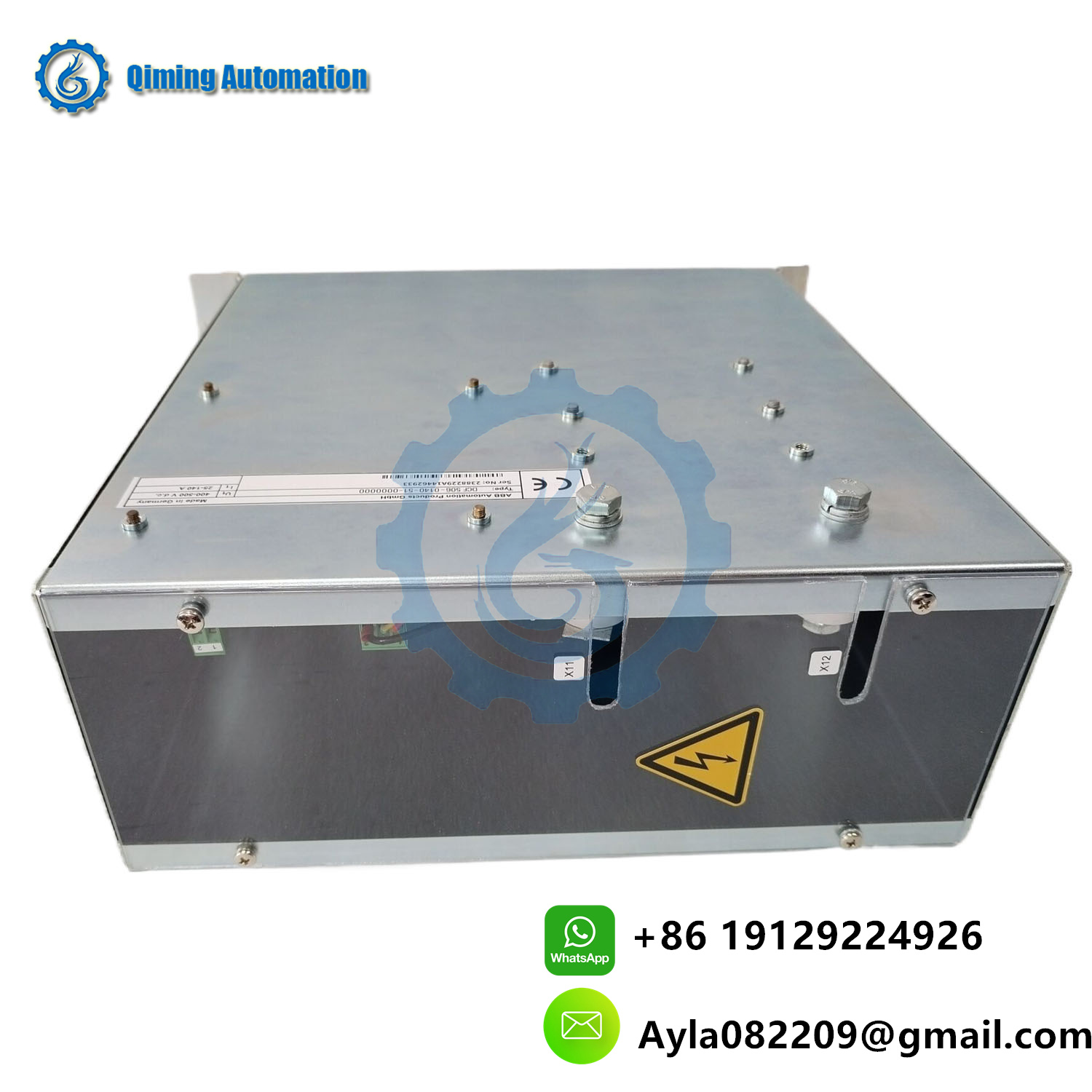
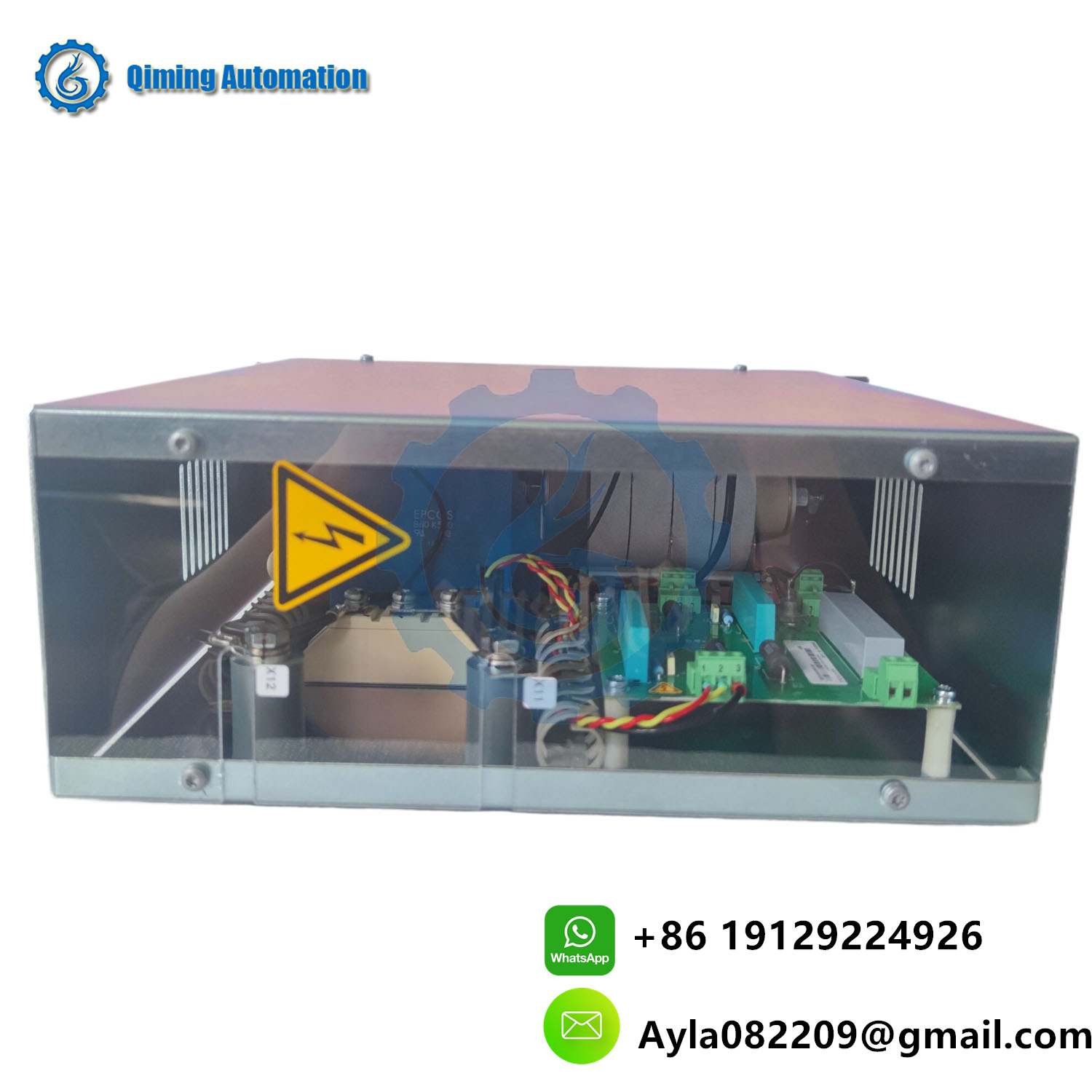

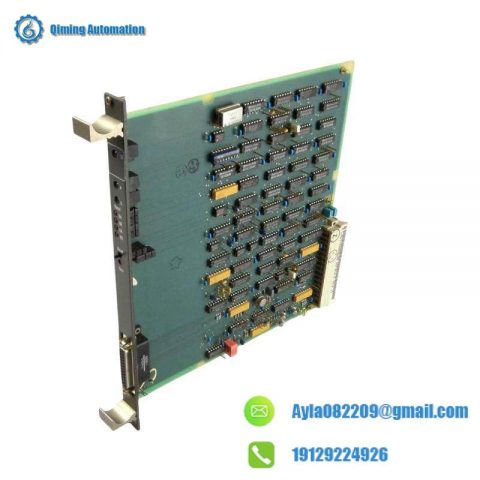
Here’s a detailed introduction to ABB DCF506-0140-51, covering its technical parameters, functions, and industrial applications in English. Note that specific details about this model may vary, and consulting ABB’s official documentation is recommended for precise configurations.
ABB DCF506-0140-51 Overview
The DCF506-0140-51 is a control or power distribution module designed by ABB for industrial automation systems. While exact product categorization may depend on the application context, this module is typically used in ABB’s motor control, drive systems, or process automation solutions to ensure reliable operation and precise control in demanding environments.
Key Technical Parameters
- Input Specifications:
- Input Voltage: Likely 24–48 V DC or 110–240 V AC (common for ABB industrial modules).
- Input Current: Dependent on configuration (e.g., 5–20 A range).
- Frequency: 50/60 Hz (for AC variants).
- Output Specifications:
- Output Voltage/Current: Configurable for motor control or load distribution (e.g., 0–10 V DC for analog signals or relay outputs).
- Power Rating: Estimated 50–100 W (varies with application).
- Protection Features:
- Overcurrent, short-circuit, and overtemperature protection.
- Surge protection for input and output terminals.
- Environmental Ratings:
- Operating Temperature: -20°C to +60°C (-4°F to +140°F).
- Humidity: Up to 95% non-condensing.
- Certifications: Compliant with IEC, UL, and CE standards.
- Communication Interfaces:
- Digital I/O: Multiple configurable input/output channels.
- Fieldbus Support: Likely compatibility with PROFIBUS, Modbus, or CANopen.
- Ethernet/IP: Optional for integration with higher-level control systems.
- Mechanical Design:
- DIN rail-mountable or panel-mounted design.
- Compact dimensions (e.g., 100 x 50 x 75 mm).
- IP54/IP65 protection for dust/water resistance (application-dependent).
Primary Functions
- Motor Control:
- Speed regulation, torque control, or start/stop functionality for motors in industrial machinery.
- Integration with ABB’s ACS drive series for variable frequency control.
- Power Distribution:
- Distributes and manages power to downstream components (e.g., sensors, actuators, PLCs).
- Supports redundancy configurations for critical systems.
- Signal Conditioning:
- Converts analog/digital signals between field devices and control systems.
- Isolation of signals to prevent noise interference.
- Diagnostics & Monitoring:
- Real-time status monitoring via LED indicators or software interfaces.
- Fault logging and predictive maintenance alerts.
- Safety Compliance:
- May include safety-rated outputs (e.g., SIL2/SIL3 compliance) for emergency shutdown systems.
Typical Applications
- Motor Control Centers (MCCs): Automation of pumps, fans, and conveyors.
- Process Industries: Chemical, pharmaceutical, and food & beverage production.
- Renewable Energy: Wind turbine pitch control or solar tracking systems.
- Building Automation: HVAC and lighting control.
- Material Handling: Robotics and automated guided vehicles (AGVs).
Advantages
- Flexibility: Configurable for diverse industrial applications.
- Robustness: Designed to withstand harsh environments (vibration, temperature extremes).
- Interoperability: Seamless integration with ABB’s ecosystem (e.g., AC 800M PLCs, 800xA DCS).
- Energy Efficiency: Optimizes power usage in motor-driven systems.

There are no reviews yet.